
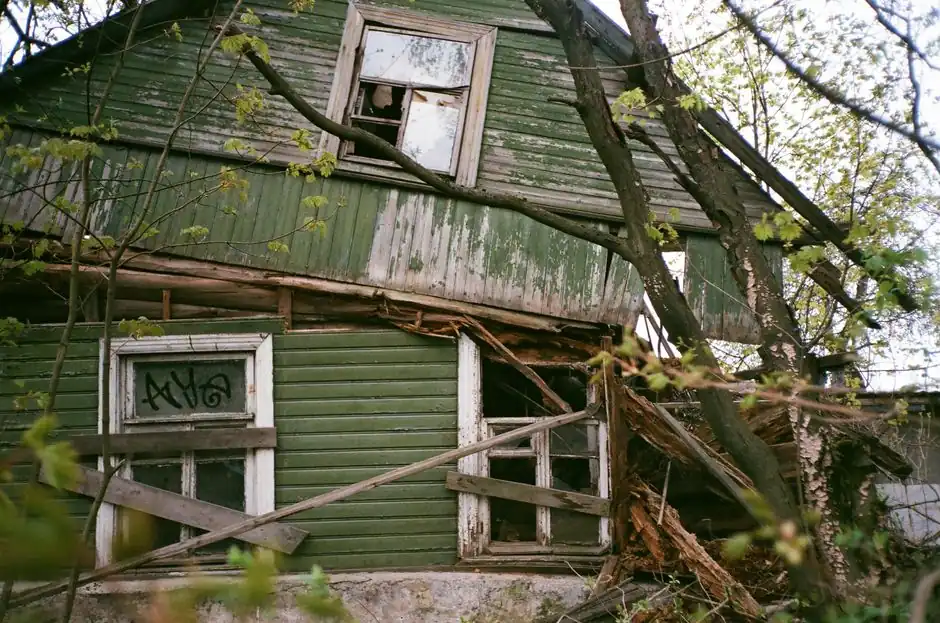
If a tree falls on your roof in Connecticut, get everyone out of the house, call 911 if any part of the tree is touching power lines, and do not climb up to look at the damage yourself. Then call your insurance company the same day and get a licensed roofer out to tarp the opening before the next rain. The structural damage is almost always less catastrophic than it looks from the ground - the water damage that follows is what turns a $4,000 repair into a $40,000 one.
We handle tree-impact calls across the state every storm season, from the March nor'easters through the October remnants that keep coming later and later. What follows is the exact order of steps we walk homeowners through on the phone, plus what the repair actually costs in 2026 and how to keep your claim from getting denied.
Get everyone out and call 911 if the tree is on power lines
If the tree is touching or near any power line, treat the entire tree and the ground around it as live and get everyone out of the house immediately. Connecticut's older neighborhoods - the ones with mature oaks and maples planted 80 years ago - are where we see this most, and Eversource will not touch the tree until the lines are de-energized. Call 911 first, then Eversource, then wait. Do not let a neighbor with a chainsaw start cutting.
If the tree is clearly not near any wires and the house is stable, you can stay inside while you make calls. Listen for sounds that mean you should not: popping or cracking from the ceiling, a sudden sag in a hallway, or the smell of gas. Any of those means evacuate and call 911 from outside.
Do not go up on the roof to inspect the damage yourself
Every year we get called to a house where the homeowner went up on a wet, debris-covered roof to take photos and ended up in the emergency room. A tree-impact roof is unstable in ways you cannot see from the ladder - punctured decking, cracked rafters, shingles that look fine but have lost their seal. Stay on the ground.
What you can do from the ground is look for the obvious: a visible hole, daylight coming through attic boards, water stains spreading on a ceiling, or a ridge line that has visibly dipped. Take photos from the yard with your phone. That's enough for the insurance adjuster to open the claim.
If you want a professional assessment before you file anything, a roof inspection in Connecticut takes about 45 minutes and gives you a written report with photos you can hand straight to your carrier.
Document everything before anything gets moved
Insurance adjusters decide claims based on evidence, and the evidence disappears the moment the tree is cut up and hauled away. Before you call a tree service, walk the property and photograph everything.
- The tree itself, from multiple angles, including the stump and root plate.
- The impact point on the roof, from the ground and from any window that looks out on it.
- Every interior ceiling stain, cracked rafter, and water-damaged floor or piece of furniture.
- Any damaged gutters, siding, windows, fence, or driveway the tree hit on the way down.
Save the photos to the cloud, not just your phone. If your carrier asks for a sworn statement of loss, you'll want a clean timeline of what happened and when. Write down the date and time the tree fell - that single detail matters more than people expect when the claim gets reviewed.
Call your insurance company the same day
Most Connecticut homeowner policies cover tree removal and roof damage when the tree fell because of a covered peril - wind, ice, or the weight of snow. What they usually do not cover is a tree that fell because it was dead, diseased, or rotted and you knew about it. That's the single most common reason a claim gets denied in this state.
Call your carrier the same day, open the claim, and get a claim number. Tell them what you saw, not what you think it will cost. If you have a mortgage, your lender will need to be listed on any insurance check over a certain threshold - usually a few thousand dollars - so expect that paperwork.
Two things to know about Connecticut specifically. First, if the tree was on a neighbor's property, their insurance may be responsible for the removal and your insurance for the roof damage, and the two carriers will work it out between them. Second, if the tree fell on a detached garage, shed, or fence, coverage limits are often much lower than for the main dwelling. Read the declarations page before you assume anything.
Get the roof dried in before the next storm
Drying in - also called tarping or emergency board-up - is the step that saves the most money in the whole process. A roof with a two-foot hole in it will take on hundreds of gallons of water in a single Connecticut rainstorm, and that water travels. It soaks insulation, runs down rafters into wall cavities, and shows up three weeks later as a sagging ceiling in a room nowhere near the impact point.
Emergency tarping is a temporary fix, not a repair. It buys you two to eight weeks while the claim is processed and materials are ordered. If the damage is severe enough that the roof structure is compromised, we may need to shore up rafters from inside the attic before we tarp.
This is where emergency roofing services in Connecticut earn their keep. Our crews can be on a roof in most of the state within a few hours of your call, and we tarp with weighted, reinforced material that holds through a real storm - not the blue plastic that flaps loose the first time the wind picks up.
What does tree damage repair actually cost in Connecticut?
Typical 2026 pricing in this area runs $600 to $1,200 for emergency tarping and debris clearing, $1,500 to $4,500 for partial roof repair where the decking is intact, and $8,000 to $22,000 for a full section replacement with new sheathing and rafters. Structural repairs - sistering rafters, replacing a ridge beam, fixing a sagging ceiling - push the top of that range higher.
Tree removal itself is separate and usually runs $800 to $2,500 depending on size and access. If the tree is still resting on the roof, the tree service and the roofer need to coordinate: the roofer supports the structure, the tree service cuts in sections from the top down. We do this dance with the same three tree companies in most of our service area, and it goes faster when both are on site at the same time.
What drives the price up more than anything else is delay. A roof that gets tarped the same day is a repair. A roof that sits open for two weeks is a repair plus mold remediation plus interior drywall plus a flooring replacement. We have seen a $3,800 tarp-and-patch turn into a $31,000 claim because the homeowner waited for the adjuster to visit before doing anything.
Common mistakes Connecticut homeowners make after a tree hits the roof
The mistakes we see most often are all about sequencing - doing the right thing in the wrong order, or skipping a step because it feels like it can wait.
- Cutting up the tree before photographing it. Once it's in sections on the lawn, the adjuster can't tell whether it was a healthy tree or a dead one.
- Hiring the cheapest tarp job. A $200 tarp that blows off in the next storm does nothing except give the carrier a reason to question the whole claim.
- Waiting for the adjuster before tarping. Your policy requires you to mitigate further damage. Waiting is the fastest way to get a partial denial.
- Signing a contractor's "assignment of benefits" form. That hands your claim over to the contractor. You lose control of the negotiation and, in some cases, the settlement.
- Paying the roofer in full before the work is inspected. Hold the final payment until you and the adjuster have both signed off.
One more: do not let a roofer tell you the whole roof needs replacing when the damage is confined to one slope. We replace what's damaged and match the rest. If your shingles are discontinued, we'll tell you honestly that a full roof replacement in Connecticut may be the cheaper long-term call - but that's a conversation, not a sales pitch.
When to call a professional
Call us the same day if the tree is still on the roof, if you can see daylight through the attic, if any ceiling is sagging or stained, or if the impact was hard enough to crack a window or knock pictures off the wall. Those are all signs the structural load path has been compromised, and they get worse with every rain.
RoofPros Connecticut handles tree-impact calls across the state, from the shoreline towns up through the northwest hills. We tarp, we document, we work directly with your adjuster, and we do the permanent repair once the claim is settled. If the tree is still on the roof, tell the person who answers the phone - that changes which crew we send and what equipment comes with them.
If you're not sure whether the damage is serious, call anyway. A ten-minute phone conversation with someone who has looked at a thousand of these is worth more than an hour of guessing.
Frequently Asked Questions
Does homeowners insurance cover a tree falling on a roof in Connecticut?
Yes, in most cases - if the tree fell because of wind, ice, or snow weight. The claim is usually denied if the tree was dead or diseased and you knew about it. Removal is typically covered up to $500 to $1,000 per tree, with higher limits for trees blocking a driveway or hitting the house.
How long do I have to file a claim after a tree hits my roof?
Most Connecticut policies require prompt notice - practically, file within 24 to 72 hours. There's no hard legal deadline in the policy language, but waiting weeks gives the carrier room to argue the damage got worse because you didn't mitigate. Call the same day the tree falls.
Can I stay in my house while the roof is being repaired?
Usually yes, if the damage is confined to one section and the ceiling is stable. If a rafter is cracked, a ceiling is sagging, or the tree is still on the roof, we recommend staying elsewhere until the structure is shored up. That's typically one to three days.
Who pays for tree removal - me or my neighbor?
If the tree was on your neighbor's property and fell onto your house, your insurance covers the roof damage and theirs typically covers the removal. If the tree was on your property, your policy covers both. In practice, the two carriers sort it out - you just file with yours.
How long does a tree-damage roof repair take?
Tarping happens the same day. Permanent repairs run two to five days for a partial section, and one to two weeks for a full slope replacement, depending on material availability. Asphalt shingles are usually in stock; metal panels and certain architectural shingles can add a week.
Get help with Roofing in Connecticut
A tree on the roof is a bad day, not a catastrophe - as long as you get it tarped, documented, and claimed in the right order. We've walked hundreds of Connecticut homeowners through this exact process, and the ones who call us first almost always end up with a smaller, faster, less painful repair.
Call RoofPros Connecticut at (844) 720-2263. If the tree is still on the roof, say so when we pick up, and we'll get the right crew moving toward you.