
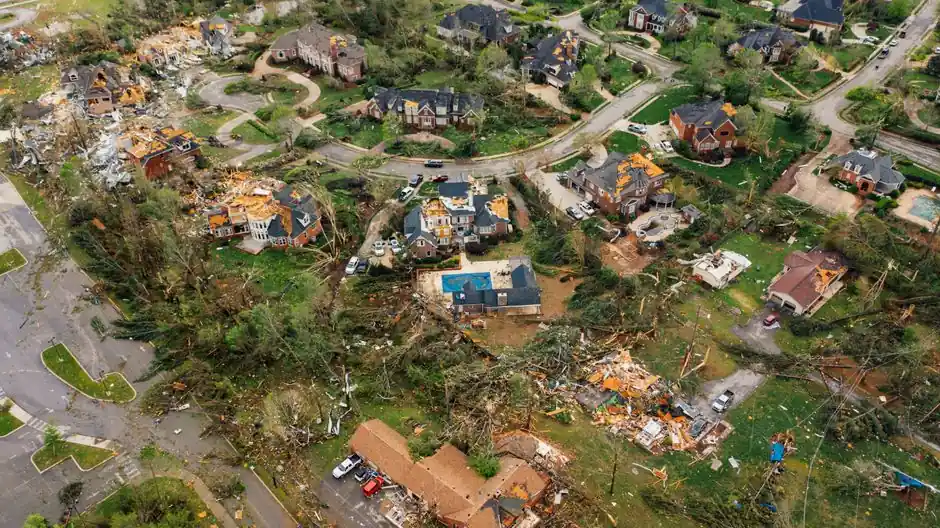
The clearest signs you need emergency roof repair in Bridgeport are water actively entering your home, a roof surface that has partially collapsed or sagged, missing or torn-off shingles after a storm, and any leak you cannot trace to a plumbing or window source. If you can see daylight through the roof deck or hear water running inside a wall, that is an emergency - not a next-week appointment. Emergency roof repair in Bridgeport is any repair needed within 24 hours to stop active water intrusion or prevent a structural failure. The rest of this post walks through the specific signals, what they mean, and how to protect your house in the first hour.
We are RoofPros Connecticut, and we have climbed enough Bridgeport roofs to know that the damage you can see is usually the smaller half of the problem. The bigger half is the water that has already traveled into your attic, insulation, and ceiling drywall.
What Counts as an Emergency Roof Repair in Bridgeport?
Emergency roof repair in Bridgeport is work that has to happen today because water is getting in or the roof is no longer safe. A cracked flashing boot around a vent pipe is not an emergency. A two-foot section of ridge cap peeled back with rain blowing sideways into your attic is.
Use this as your filter. Call us today if any of these are true:
- Water is dripping, pooling, or staining a ceiling or wall right now.
- Shingles, flashing, or a chunk of ridge cap are on the ground or in the yard.
- The roofline sags, dips, or the fascia is pulling away from the wall.
- A tree limb is resting on the roof or has punched through the deck.
- You can see daylight through the roof boards from inside the attic.
- Your ceiling is bulging or soft to the touch.
Everything else - a few granules in the gutter, one lifted shingle on a south-facing slope, a slow stain that has not grown in weeks - is a scheduled repair, not an emergency. Knowing the difference saves you money and keeps our crews free for the houses that are actually taking on water.
The Signs You Need Emergency Roof Repair in Bridgeport Right Now
Bridgeport roofs give you warnings. Most homeowners miss the first three and only call when the fourth one shows up as a brown ring on the ceiling.
Water stains that grow within hours
A stain that appears overnight and spreads during the next rain is active intrusion. Measure it. If a quarter-sized stain becomes a dinner plate in one storm, water is moving fast behind the drywall and the repair cannot wait for a dry day.
Shingles in the yard after a storm
Finding three or four shingles on the lawn after a nor'easter is normal wear. Finding a dozen, or finding them stripped from one entire slope, means the sealant bond has failed across a section. That slope will leak on the next rain, and in Bridgeport that next rain is usually within the week.
Granules piling up in gutters and at downspout outlets
Asphalt shingles shed granules as they age, but a sudden heavy accumulation - a cup or more at each downspout after one storm - means the shingle surface is breaking down. On a roof older than 15 years, that is a sign the whole field is near the end of its life and a patch will not hold.
Sagging, spongy, or visibly dipped rooflines
Stand across the street and look at the ridge. A straight ridge should look straight. A dip means the decking or a rafter has taken on water and lost strength. This is the one sign you never wait on - a sagging roof can fail under snow load, and Bridgeport gets enough January snow to matter.
Daylight or water in the attic
Take a flashlight into the attic during the day and turn the lights off. Any pinhole of daylight is a hole in your roof. Any dark streak on the underside of the sheathing is a leak that has been running long enough to soak the wood.
Interior signs people misread
Peeling paint on a ceiling, a musty smell in an upstairs bedroom, or a bathroom exhaust fan that suddenly drips are all roof symptoms, not paint or plumbing problems. We see this constantly in Bridgeport's older two- and three-family homes, where a roof leak travels along a joist and shows up fifteen feet from where it entered.
Why Bridgeport Roofs Fail Faster Than Most of Connecticut
Bridgeport sits on the Sound, and that salt air does real work on roofing materials. Coastal wind drives rain sideways into seams and under flashing in a way that inland towns never see. Add the freeze-thaw cycle - roughly 60 to 70 cycles a year along the shoreline - and you get ice expanding into every small crack, prying shingles loose one winter at a time.
The housing stock matters too. A large share of Bridgeport's roofs sit on homes built before 1960, many with original plank decking and multiple layers of shingles stacked on top. Two or three layers of old shingles trap heat, hide soft spots, and make a small leak hard to find until it has already soaked the deck.
We handle a lot of this work across the city, from the North End to the East Side, and the pattern is consistent: roofs near the water and roofs on older multi-family buildings fail first. If you own one, budget for a professional roof inspection in Connecticut every two years instead of every five.
What to Do in the First Hour After You Spot Damage
What you do in the first hour decides how much of your ceiling, insulation, and flooring survives. Water damage compounds - a leak that soaks drywall for six hours costs far less to fix than one that runs for three days.
- Get the water off your stuff. Move furniture, electronics, and rugs out from under the drip. Put buckets and towels down. If the ceiling is bulging, do not poke it - call us and let a pro relieve it safely.
- Kill the power to affected rooms if water is near wiring. A leak over a ceiling fan or recessed light is an electrical hazard. Shut the breaker for that room at the panel.
- Photograph everything. Wide shots of the room, close shots of the stain, the shingles in the yard, and any damaged belongings. Your insurance adjuster will want them, and so will we.
- Do not climb the roof in the rain. More Bridgeport homeowners get hurt on wet roofs than get their leak fixed. Stay on the ground.
- Call for emergency service. We tarp and stabilize the roof first, then schedule the permanent repair once the weather clears.
If the damage came from a storm, document the date and the weather event. Most Connecticut policies treat wind and hail damage differently from wear-and-tear, and our storm damage roof repair in Connecticut work is built around that distinction - we document the damage the way an adjuster needs to see it.
What to Watch Out For: Mistakes That Make Roof Damage Worse
The wrong response to a roof leak costs more than the leak itself. These are the mistakes we see most often in Bridgeport.
- Slapping tar over a wet roof. Sealant will not bond to a wet surface. It peels within weeks and hides the real entry point from the next person who looks.
- Hiring the first truck that knocks after a storm. Storm-chasers follow hail through Connecticut every spring. They take a deposit, tarp the roof, and are gone before the permanent repair is due.
- Ignoring a small stain because it stopped growing. A stain that stops growing in dry weather is still a hole. It will leak again on the next driving rain.
- Letting a "handyman" replace flashing. Flashing is where most leaks start and where most amateur repairs fail. It has to be woven and sealed to code, not caulked.
- Waiting for insurance before you stop the water. Your policy covers the damage, not the neglect. Mitigate first, then file.
One more: do not assume a leak is a leak. We get called out to "roof leaks" in Bridgeport that turn out to be a failed chimney cap, a clogged valley, or a cracked vent boot. A proper diagnosis takes 30 minutes and saves you from paying for the wrong repair.
When to Call a Professional
Call a professional the moment water is entering the house, the roof structure looks compromised, or you cannot find the source after a reasonable look. Those three situations are what our emergency roofing services in Connecticut exist for - we tarp, stabilize, and stop the water the same day, then come back to make the repair permanent.
For everything else, a scheduled visit makes more sense. If your roof is 15 years or older, if you have had two or more leaks in three years, or if you are seeing granules and lifted shingles across a whole slope, the honest answer is often that patching is throwing money at a roof that needs replacing. We will tell you which one you are looking at, with photos and a straight number, before any work starts.
We also work on the flat and low-slope roofs common on Bridgeport's multi-family buildings and commercial properties. Those roofs fail differently - ponding water, seam separation, and blistering - and they need a crew that does flat roofing in Connecticut regularly, not once a year.
Frequently Asked Questions
How quickly can you get to an emergency roof repair in Bridgeport?
For active leaks and storm damage, we aim to be on site within a few hours and tarp the roof the same day. Timing depends on how many calls are running after a storm, so call early and we will give you a realistic window when you book.
How much does emergency roof repair cost in Bridgeport in 2026?
Most emergency calls run $350 to $900 for tarping and a targeted repair. A full section replacement after storm damage typically lands between $1,200 and $3,500 depending on size and pitch. We give you the number before we start.
Will my Connecticut homeowners insurance cover emergency roof repair?
Sudden damage from wind, hail, or a fallen limb is usually covered; wear-and-tear is not. Emergency tarping is typically reimbursable as mitigation. We document the damage with photos and a written scope so your claim is straightforward.
Can you repair my roof in the rain?
We can tarp and stabilize a roof in most rain, which stops the water immediately. Permanent repairs - shingles, flashing, decking - need a dry surface to seal correctly, so we schedule those for the next clear window, usually within a day or two.
What should I do while I wait for the crew to arrive?
Move belongings out from under the drip, put buckets down, and shut off power to any room where water is near a light or outlet. Stay off the roof. Take photos of everything for your insurance claim before you clean anything up.
Get Help with Roofing in Bridgeport
If water is coming in right now, do not wait for a dry day - the damage gets more expensive every hour it runs. Our team handles roofing services in Bridgeport, Connecticut, from emergency tarping to full replacements, and we answer the phone when it matters.
Call RoofPros Connecticut at (844) 720-2263 and we will get a crew headed your way.